Fire Horse 2026: The Dollar's Last Year
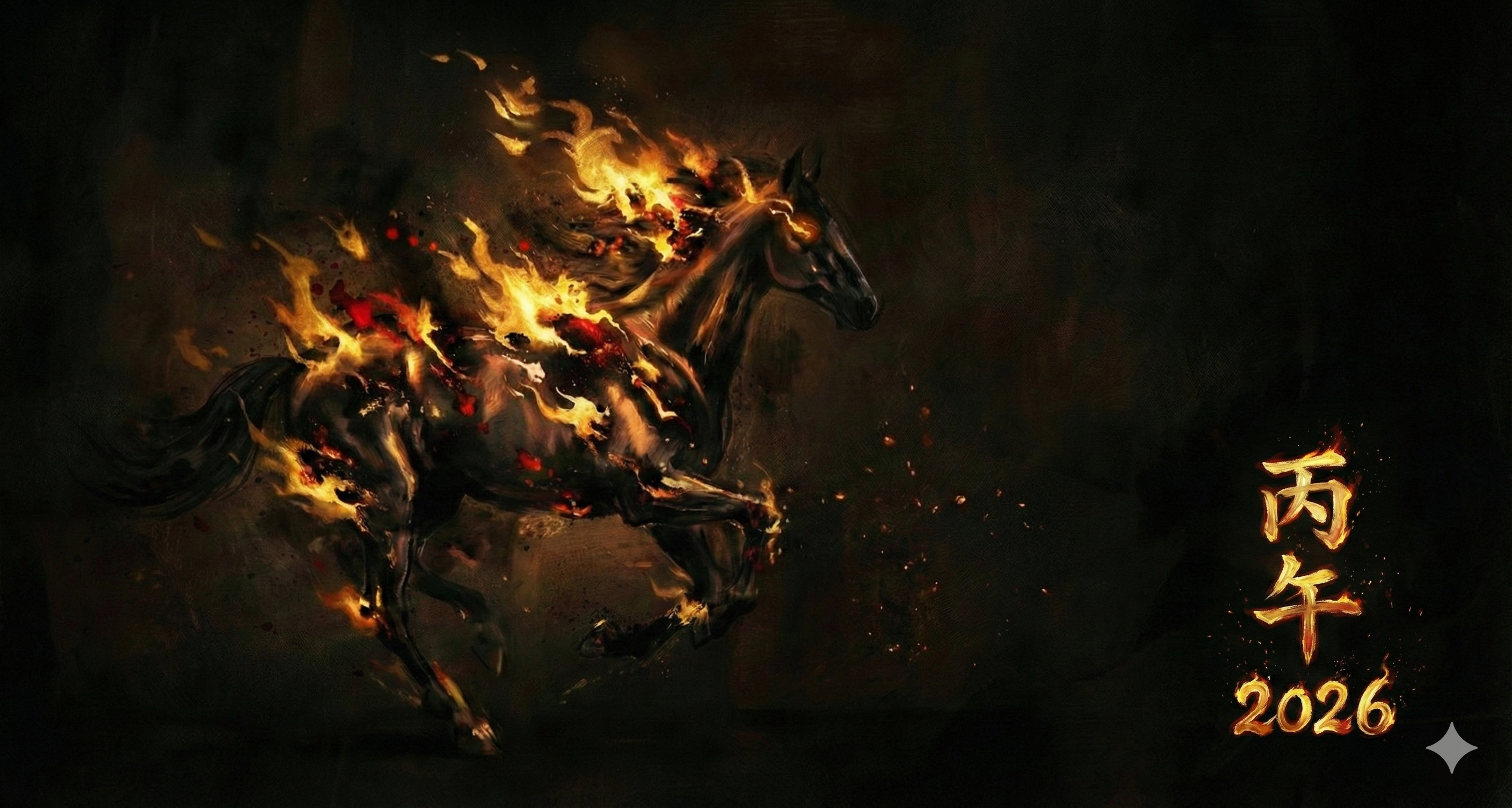
2026 is the Year of the Fire Horse—a symbol of transformation that comes once every 60 years.
In Chinese astrology, the Fire Horse represents intensity, power, and irreversible change. The last Fire Horse year was 1966, when the Cultural Revolution shattered the old order and Vietnam marked America's first imperial defeat.
Now, in 2026, another phase transition is underway. The dollar system that dominated global finance for fifty years is dying—not from crisis, but from quiet abandonment.
The Mainframe Is Dead
Think of global finance as computing architecture. For five decades, the dollar functioned like a centralized mainframe: every transaction, every trade settlement, every reserve allocation routed through New York. Countries held dollars not because they wanted to, but because the mainframe demanded it.
What's happening now is a shift to decentralized P2P. Bilateral swap agreements between central banks bypass the dollar entirely. The China-Indonesia swap, the China-Saudi agreement, the BRICS contingent reserve—these aren't alternatives to dollar hegemony. They're replacements.
The trigger wasn't economics. It was law.
When the US fined BNP Paribas $9 billion for transactions that were legal under French and EU law—simply because they cleared through New York—every country understood: if Washington can seize your dollars at will, they were never really yours.
The Signals Are Everywhere
Taiwan's Dollar Exodus
In May 2025, the Taiwan dollar surged 8% against the USD in two days—the steepest rise since 1988. This wasn't government policy. It was market participants fleeing.
| Period | USD/TWD Movement | Significance |
|---|---|---|
| May 2-5, 2025 | -8% (32.10 → 29.40) | Steepest 2-day drop since 1988 |
| Full Year 2025 | +4.27% vs USD | Best performer in Asia |
Taiwan's life insurers, sitting on $200 billion in USD assets (25% of GDP), began unwinding positions. Traders reported "no buyers for US dollars." When America's most security-dependent ally sees its private sector dump dollars en masse, the message is clear.
Japan Ends the Carry Trade
For decades, Japan's near-zero rates enabled the carry trade—borrow yen at nothing, invest in dollar assets. That era is over.
The Bank of Japan raised rates to 0.50% in January 2025—highest since 2008. More hikes are coming. The $261 billion carry trade is unwinding. When Japan raised rates in August 2024, global markets convulsed: Nikkei down 12% in a day, S&P 500 down 3%.
One of the primary mechanisms recycling Japanese savings into dollar assets is reversing.
Saudi Arabia's Pivot
In 2023, Saudi Arabia quietly let its 50-year petrodollar agreement expire. No press conference. No emergency meetings. Just silence.
| Date | Event |
|---|---|
| June 2023 | Petrodollar agreement expires without renewal |
| November 2023 | 50 billion yuan currency swap with China |
| September 2024 | Minister says Saudi "open to petroyuan" |
| October 2024 | Saudi joins Project mBridge (non-dollar settlements) |
When the world's largest oil exporter hedges against dollar hegemony, the writing is on the wall.
The $5 Trillion Liberation
Here's what Western analysts miss: this isn't primarily about decline. It's about reallocation.
After the 1997 Asian financial crisis, emerging markets learned a brutal lesson. Countries with insufficient dollar reserves were devastated. The IMF imposed austerity as the price of survival. The response: Asian central banks began hoarding dollars obsessively—an estimated $5 trillion in excess reserves beyond normal trade needs.
That insurance policy is no longer needed.
The swap networks provide liquidity without opportunity cost. Countries no longer need to park savings in low-yield Treasuries to defend against speculative attacks. That capital can now flow to domestic infrastructure, education, industrial capacity.
For two decades, every billion in US Treasuries was a billion not invested in Asian development. That constraint is gone.
Reading the Markets
Gold rising alone means fear—flight to safety.
Gold rising with copper and silver means something else. Copper is the metal of construction. Silver straddles precious and industrial. When all three rise together, the market is pricing in real economic expansion.
| Metal Pattern | Signal |
|---|---|
| Gold alone rising | Crisis, uncertainty |
| Gold + Silver + Copper rising | Infrastructure boom |
| Current pattern (2025-2026) | All rising together |
China's gold accumulation reinforces the signal. Official reserves hit 2,306 tonnes in Q4 2025—all-time high. But estimates suggest actual holdings exceed 5,000 tonnes, accumulated through state enterprises and domestic mining that never enters reported reserves.
Central banks globally bought 1,045 tonnes in 2024—a new record. Goldman projects 80 tonnes per month through 2026.
The Collateral Damage
If Asian central banks no longer need dollar reserves, who buys US Treasuries?
The implication is higher structural interest rates in the West. For decades, Asian savings recycled automatically into American bonds. That buyer is disappearing. The Western economies that relied on cheap capital face a new reality: tighter fiscal constraints, reduced room for deficit spending.
The capital that built American suburbs will build Chinese rail lines.
Civilizational Gravity
There's a deeper explanation. Neoliberal individualism never took root in East Asian societies. These are homogeneous, collective, Confucian civilizations where Western liberalism was always a surface phenomenon.
The Washington Consensus was adopted as policy, never internalized as culture. As American power wanes, the artificial overlay dissolves. The natural order—economic and cultural alignment with China—reasserts itself.
This isn't conquest. It's gravity.
The Fire Burns
The convergence is unmistakable:
- Financial exodus — Taiwan, Japan hedging against dollars
- Resource realignment — Saudi Arabia's Asia pivot
- Reserve diversification — Record gold accumulation
- Trade reorientation — Gravity pulling Asia toward integration
This isn't crisis. It's the largest redirection of capital flows in modern history.
The Fire Horse year marks the inflection point. The transition was already underway. What's new is that it became visible—and irreversible.
In Asia, the fire is construction, not destruction. And somewhere in the flames, a new world is taking shape.
For the complete analysis including the technology wildcard, Japan's paradox, and detailed examination of swap mechanics, read the full essay: 2026, China will be on fire (horse)
Disclaimer: This analysis represents geopolitical interpretation of publicly available data. It is not investment advice.